
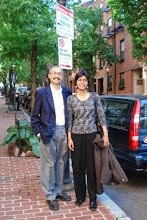
Debashish Munshi & Priya Kurian
Have you noticed what happens when a physicist sits at the same table with a psychologist; a biologist with an artist; a technocrat with an environmental activist; a bureaucrat with a bioethicist; a nanotechnologist with a social scientist; a West-trained theorist with an indigenous scholar; or a policy practitioner with an academic? The language of communication changes as each person moves away from the loaded jargon of one field to reach out to the other.
Have you noticed what happens when a physicist sits at the same table with a psychologist; a biologist with an artist; a technocrat with an environmental activist; a bureaucrat with a bioethicist; a nanotechnologist with a social scientist; a West-trained theorist with an indigenous scholar; or a policy practitioner with an academic? The language of communication changes as each person moves away from the loaded jargon of one field to reach out to the other.
Communication lies at the heart of public understanding of
science. The two of us saw communication blossoming when we brought together
natural and physical scientists, social scientists, indigenous scholars,
artists, poets, activists, and policy practitioners at an international symposium on transforming public engagement on controversial science and technology at the University of Waikato this week.
All the participants had something to say on new and
emerging technologies ranging from nanotechnology, synthetic biology, and
genetic engineering to gene mapping and assisted reproductive technologies.
But, confronted as they were with a wide variety of other points of view, they
had an opportunity to reflect on their own positions and engage in unique forms
of deliberation. They each made an attempt to listen to and understand the
other and re-formulate their own articulations.
One of the keynote speakers at the symposium, Professor Shaun Hendy, an award-winning scientist and science communicator, emphasised
that the “value of scientific knowledge depends on the context – the better
scientists are at providing the context, the better public understanding of
science will be.” A more detailed account of Professor Hendy’s talk can be
found in Peter Griffin’s Science Media Centre blog while a summary of the
policy engagement session on science communication is available in Dr Alison
Campbell’s BioBlog.
Indeed, the highlight of the symposium were the six policy
engagement sessions which followed panel presentations on the themes of
‘citizenship and deliberative democracy’; ‘science communication’; ‘new
technologies and ethics’; ‘indigenous science’; ‘science-society interface’;
and ‘designing public engagement’. It is at these engagement sessions that
people from a variety of disciplines and backgrounds with a shared interest in
potentially controversial new technologies deliberated and worked on
establishing a common ground among what initially seemed like polarised views.
The tone of the symposium was set by Professor John Dryzek
of the Australian National University who made the point that “deliberative
democracy rests on the idea that democratic legitimacy depends on the right,
opportunity, and capacity of those subject to a collective decision to participate
in consequential deliberation about its content”.
In another keynote address, indigenous scholar Associate
Professor Kim TallBear of the University of Texas at Austin presented a
powerful critique of the “unethical technoscientific research done on
indigenous people by scientists whose assumptions and goals are shaped by a
colonial mindset”. This keynote was followed by a stimulating session on
“critical indigenous views on biocolonialism and the impact of new
technologies” led by Associate Professor Leonie Pihama of the Te Kotahi Research Institute. The symposium had a strong Maori participation. In
thought-provoking engagement sessions led by Sandy Morrison and Maui Hudson of
the University of Waikato, participants suggested that the very process of
decision making on scientific funding should be flipped so as to be driven by
community needs and social justice commitments rather than narrowly defined
economic gain. The symposium also featured a kapa haka performance by
students of the Tai Wananga, a school dedicated to the teaching of science and
innovation with a strong Maori perspective. The performance was coached and
choreographed by their teacher, Talei Morrison, who herself recently completed
Masters research on ‘Maori perspectives on new and emerging technologies’.
The final keynote was by Professor Lyn Kathlene of the Spark
Policy Institute, USA, who talked about the need for “contextual creativity” to
shape public engagement. “Flexibility, out-of-the-box thinking, and a
willingness to venture into unknown territory are necessary ingredients to
designing a process that works for both policy planners and citizens”, she
said.
Indeed, nurturing contextual creativity was the goal of the
symposium. If the cross-disciplinary conversations are an indication,
participants would have made several steps towards this goal.


 Posts
Posts

